Kamakura Day Trip from Tokyo: Great Buddha, Zen Temples, and Enoshima Island
Quick Facts
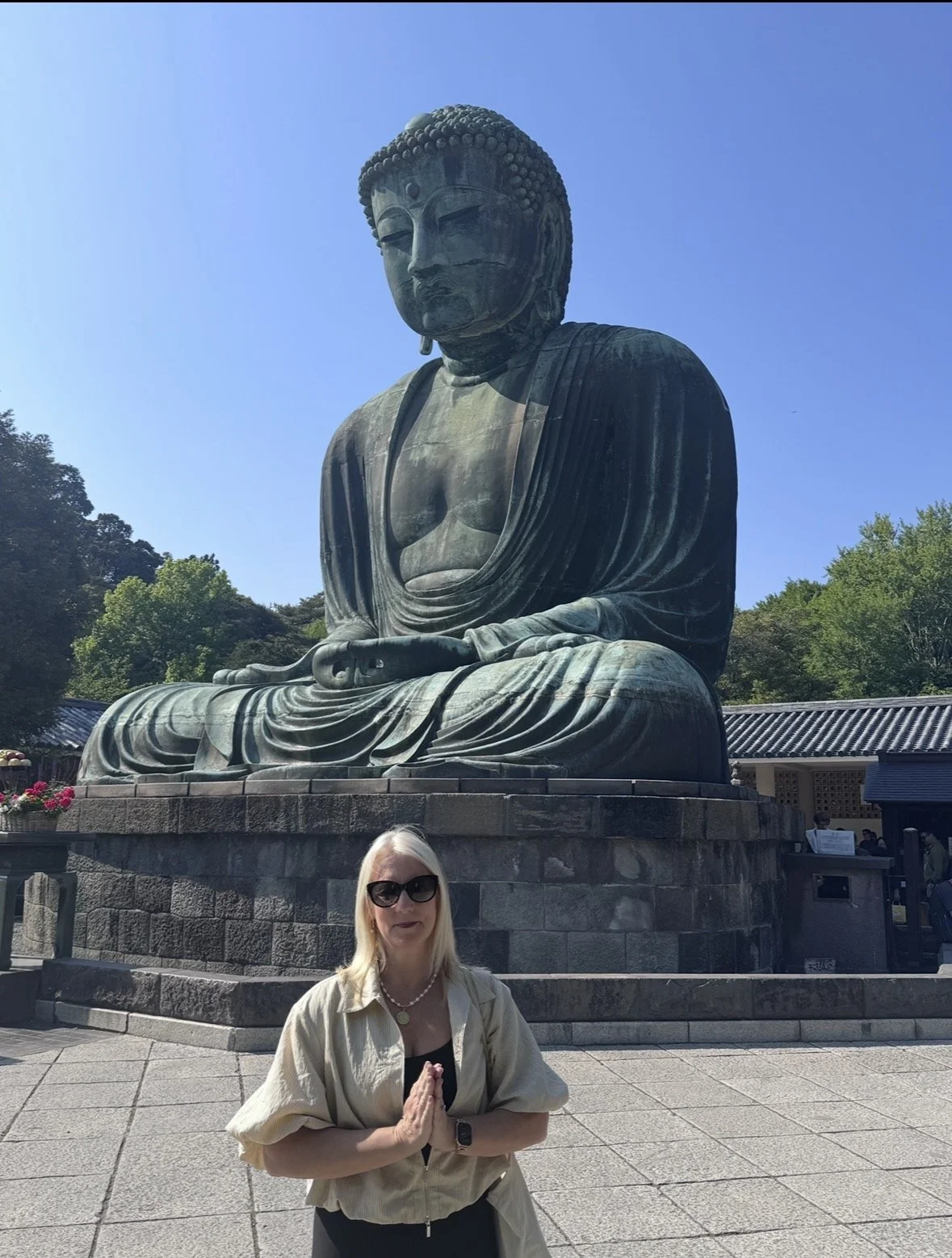
Location: Kotoku-in Temple, Kamakura
Height: 13.35 meters (43.8 feet)
Material: Bronze
Completed: Around 1252 (Kamakura Period)
Interior Access: Yes
Typical Visit Time for Buddha: 30–45 minutes /Full day if combine with Enoshima
Best Combined With: Hase-dera Temple, Komachi Street, Enoshima
Distance from Tokyo: ~1 hour
Best paired with: Enoshima
Nearest station: Kamakura Station
Suggested Kamakura Itinerary
Morning
Engaku-ji Temple
Komachi Street
Afternoon
Great Buddha
Hase-dera Temple
Enoshima
Evening
Return to Tokyo
Engaku-ji Temple: Kamakura's Zen Sanctuary
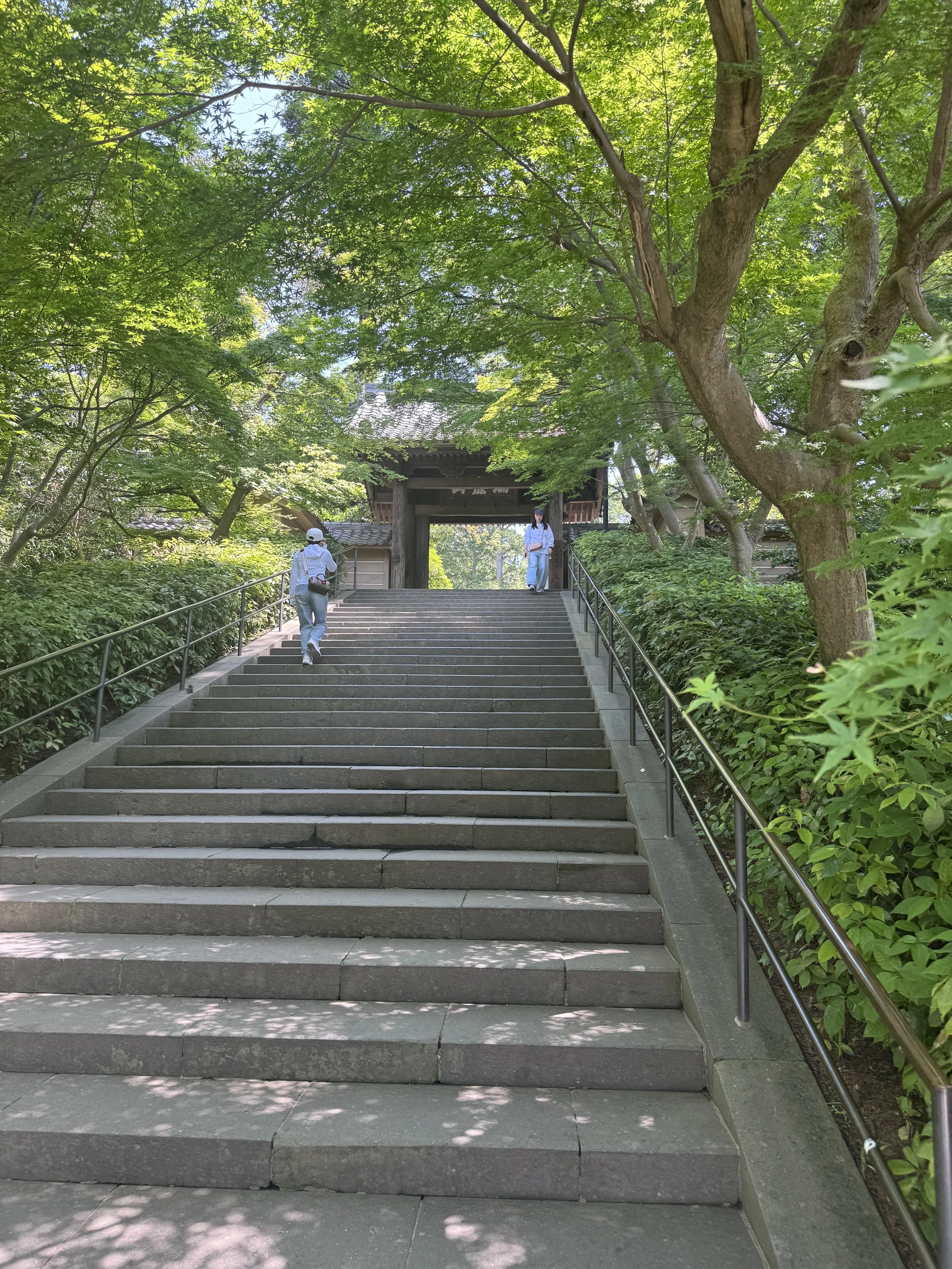
Just a short walk from Kita-Kamakura Station, Engaku-ji Temple offers one of the most peaceful introductions to Kamakura. Founded in 1282 after the Mongol invasions, the sprawling Zen complex combines towering wooden gates, centuries old trees, meditation halls, and quiet temple grounds that feel far removed from nearby Tokyo.
Unlike the crowds found at Kamakura's Great Buddha, Engaku-ji rewards travelers who enjoy history, architecture, and a slower pace. Ancient cedar and juniper trees shade the pathways while traditional wooden structures showcase the simplicity and elegance of Japanese Zen design.
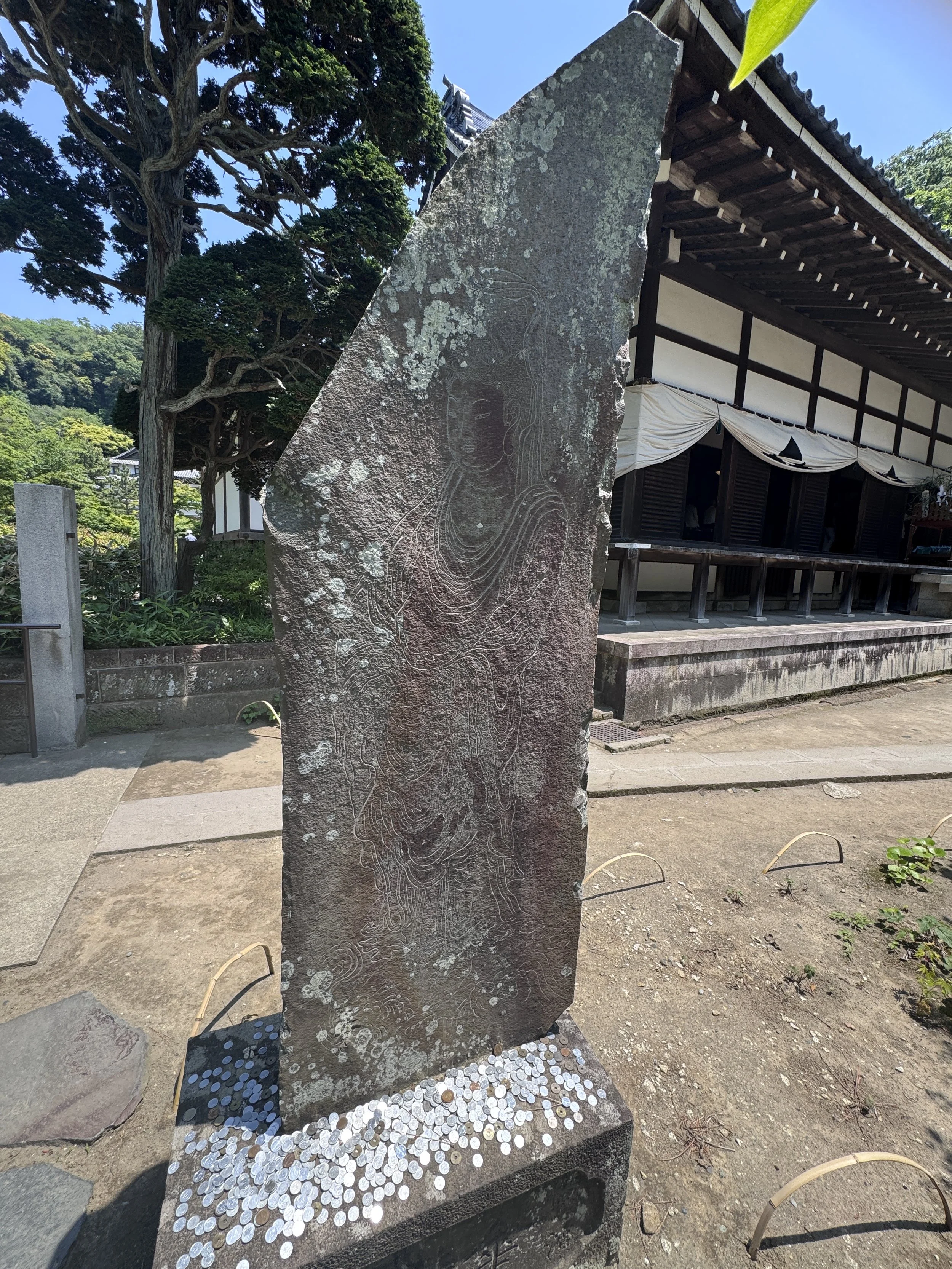
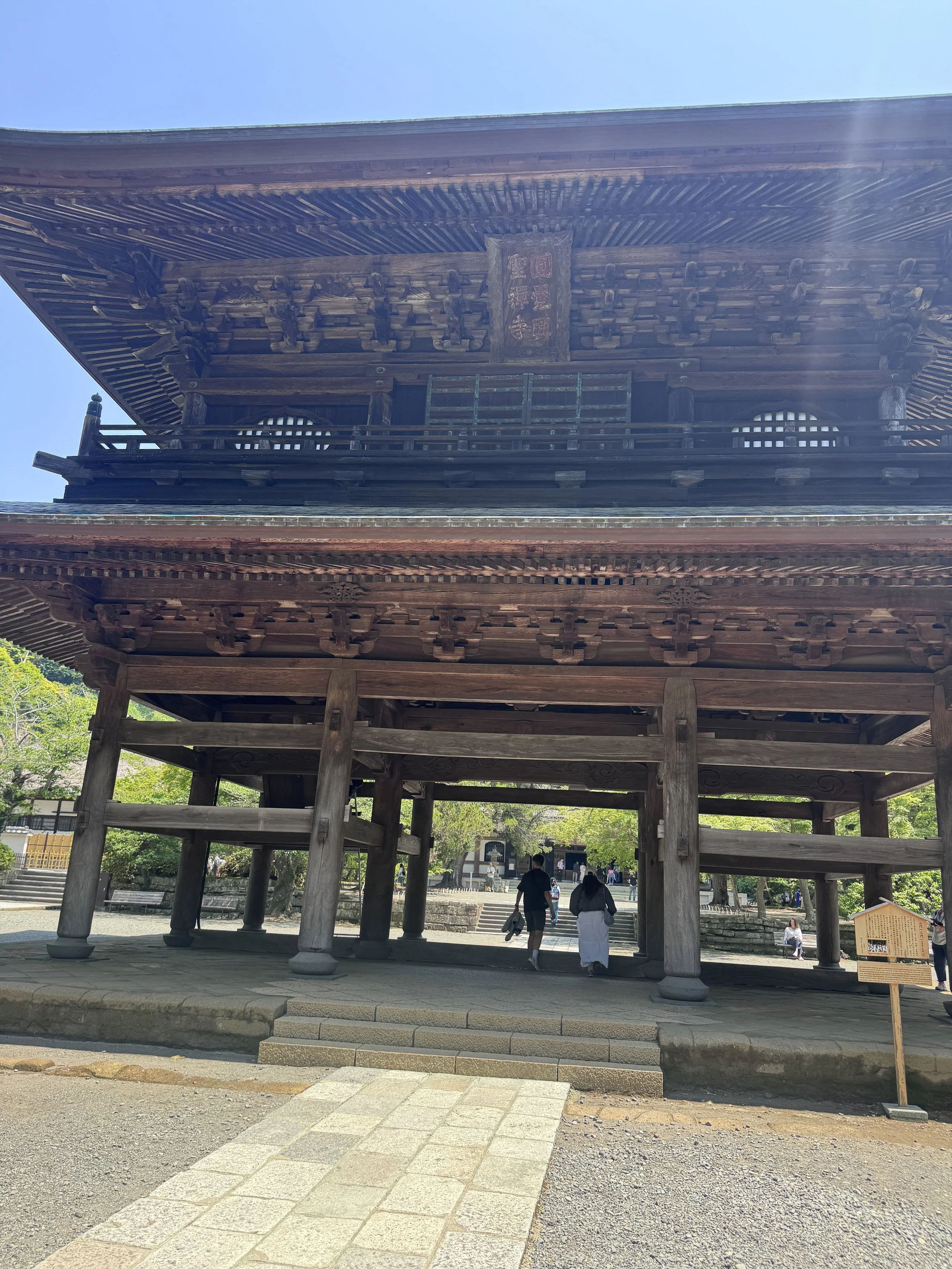
The massive Sanmon Gate is one of the temple's most recognizable landmarks. Passing beneath its weathered wooden beams marks the symbolic transition from the busy outside world into a space dedicated to reflection and contemplation.
One of the highlights of our visit was the enormous sacred juniper tree standing beside the main temple buildings. Estimated to be hundreds of years old, its twisting branches and massive trunk have become one of the defining images of Engaku-ji.
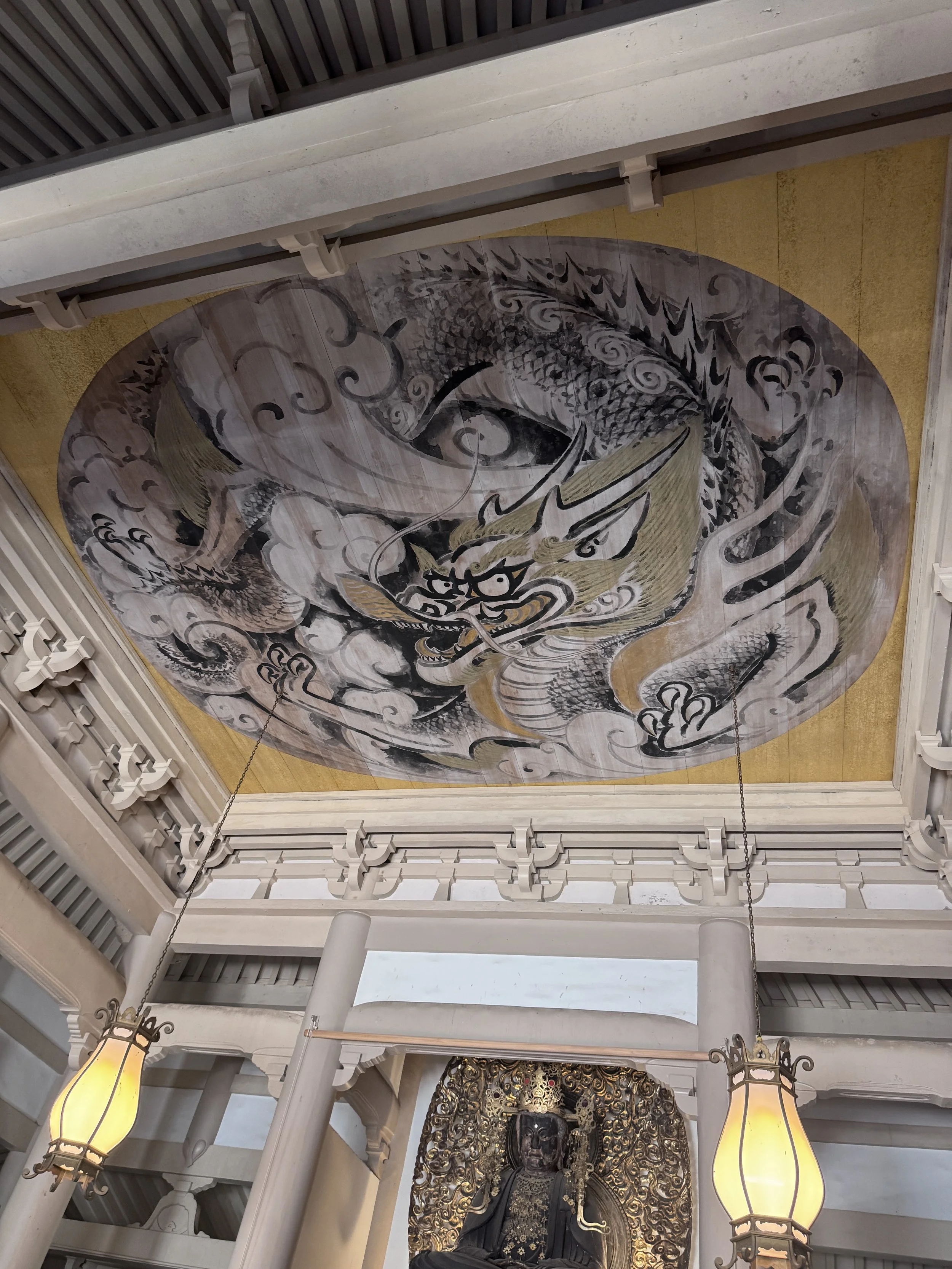
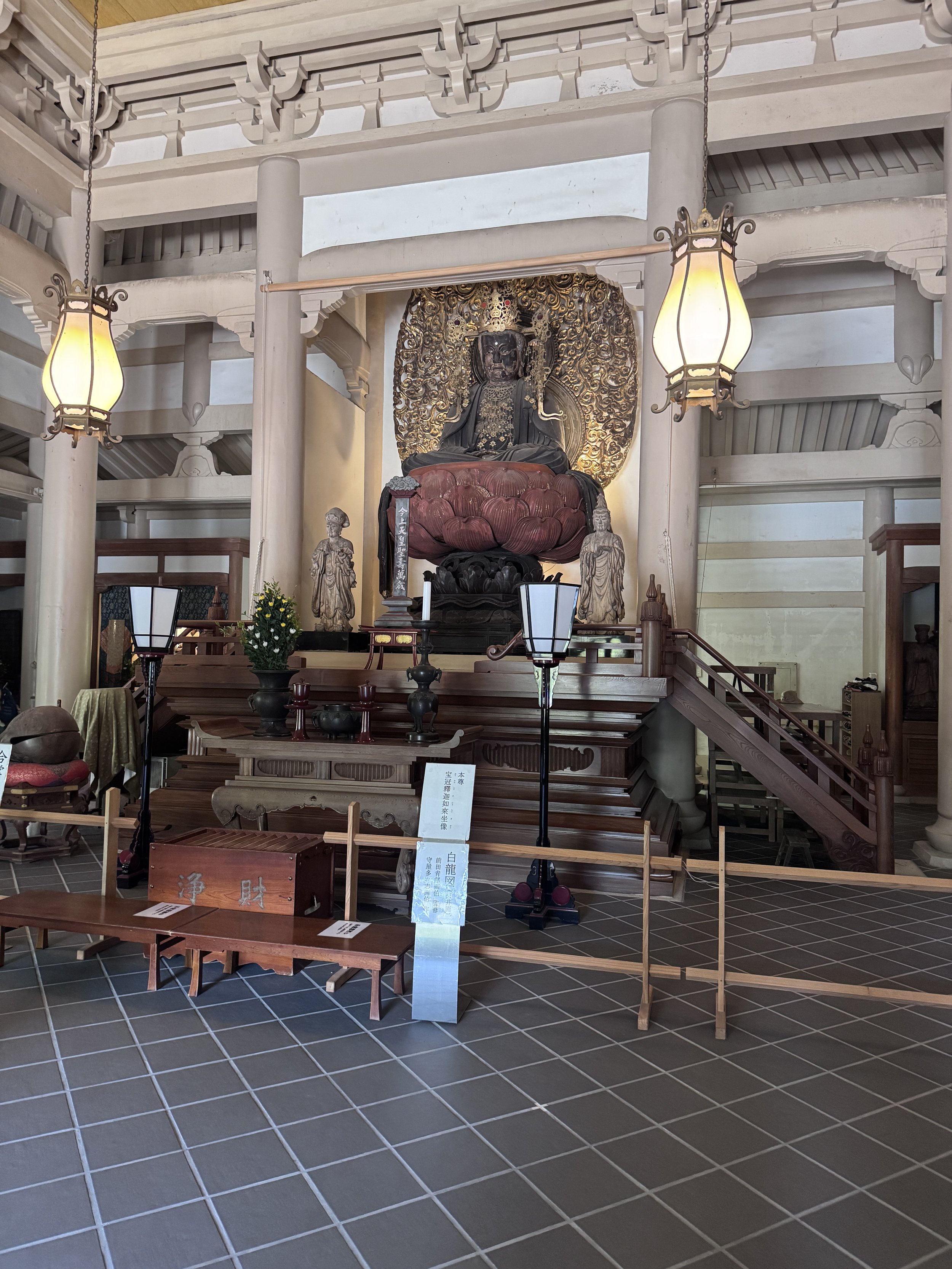
Inside the temple grounds, visitors can explore the Buddha Hall, admire intricate religious artwork, and appreciate the dragon ceiling painting that overlooks worshippers below. While individual buildings are impressive, the atmosphere of the entire complex is what makes Engaku-ji memorable.
For travelers planning a Kamakura day trip from Tokyo, Engaku-ji is an ideal first stop before continuing on to Tsurugaoka Hachimangu Shrine, Komachi Street, the Great Buddha, or Enoshima.
The Great Buddha of Kamakura (Kotoku-in)

Hakone Guide
Japan Guide
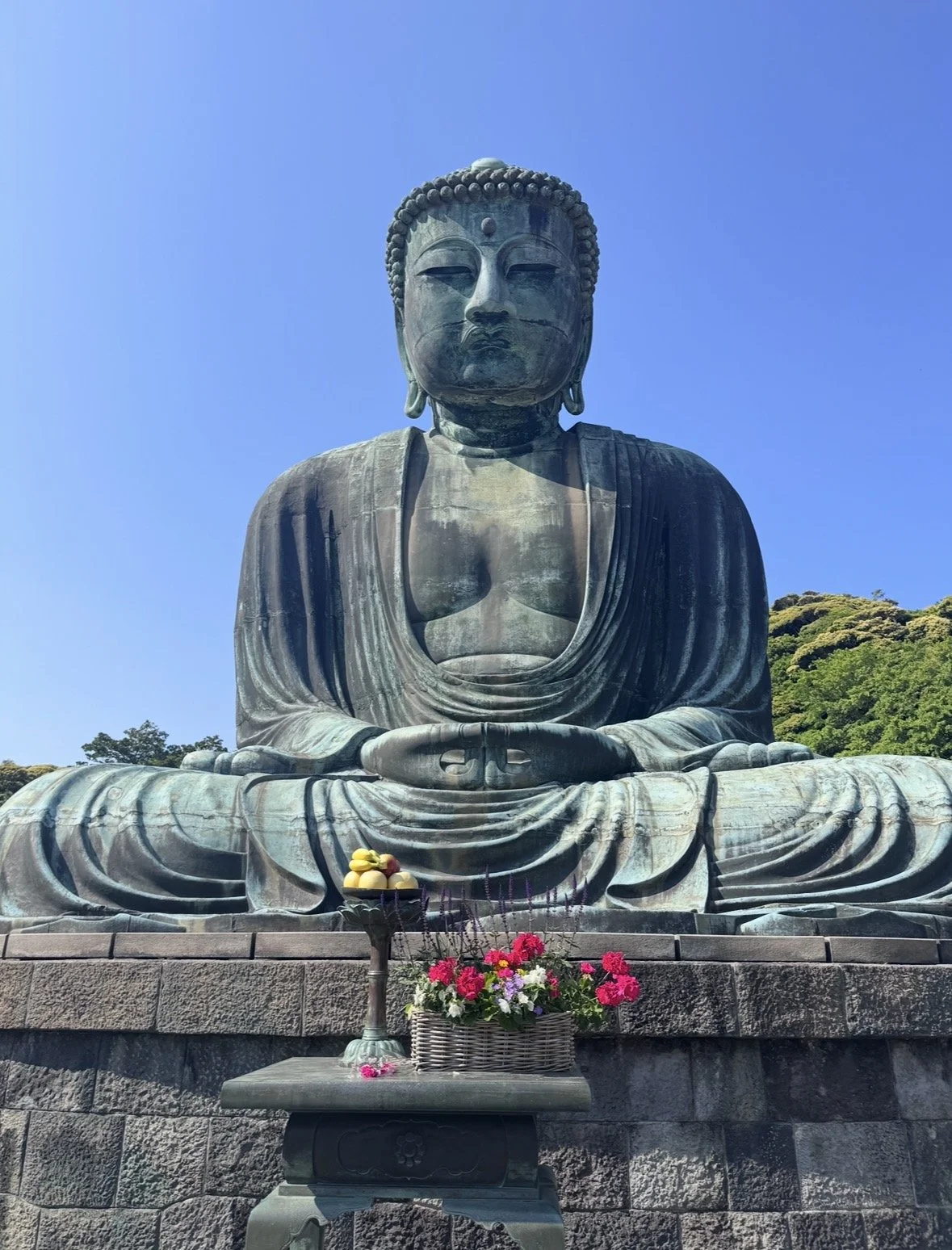
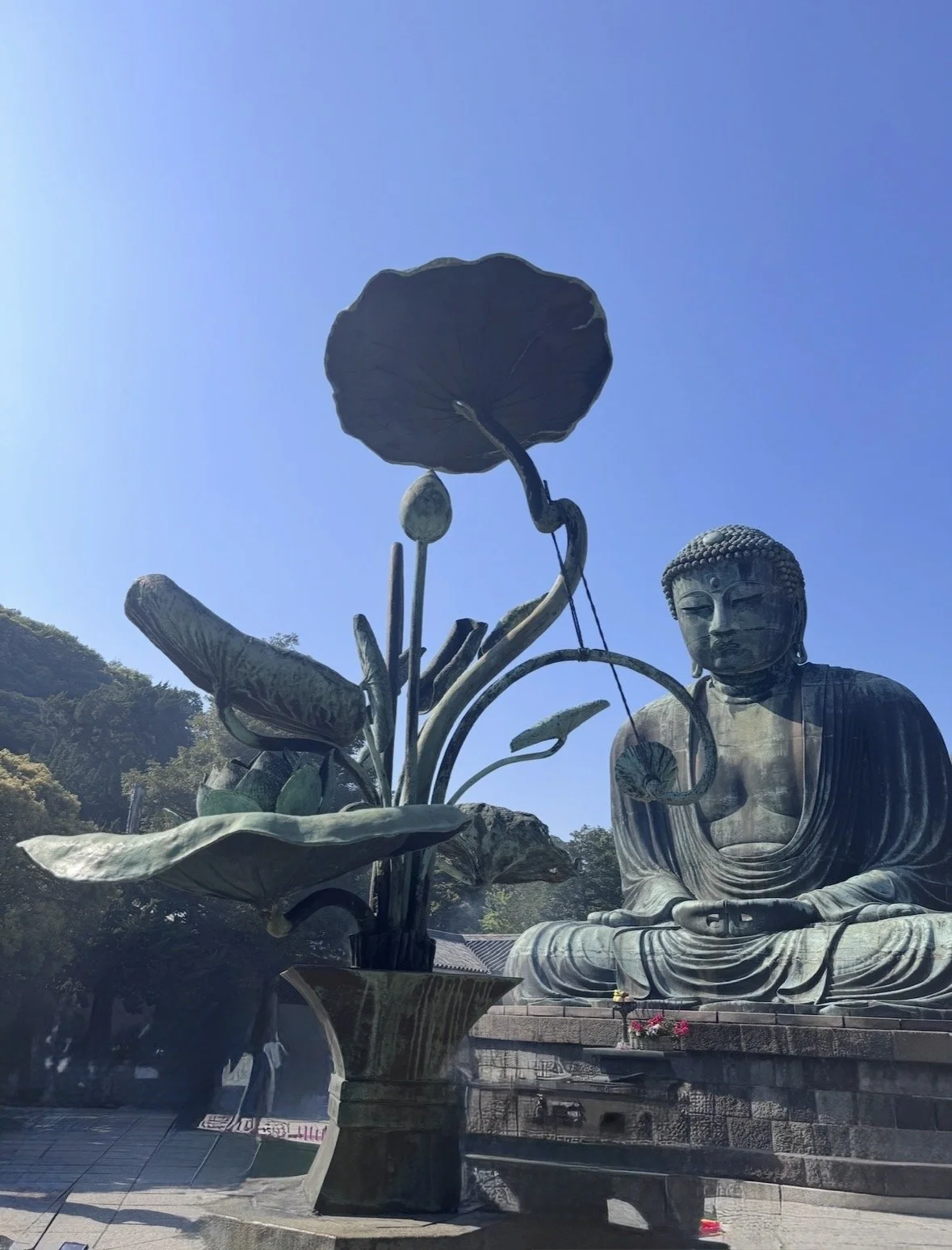
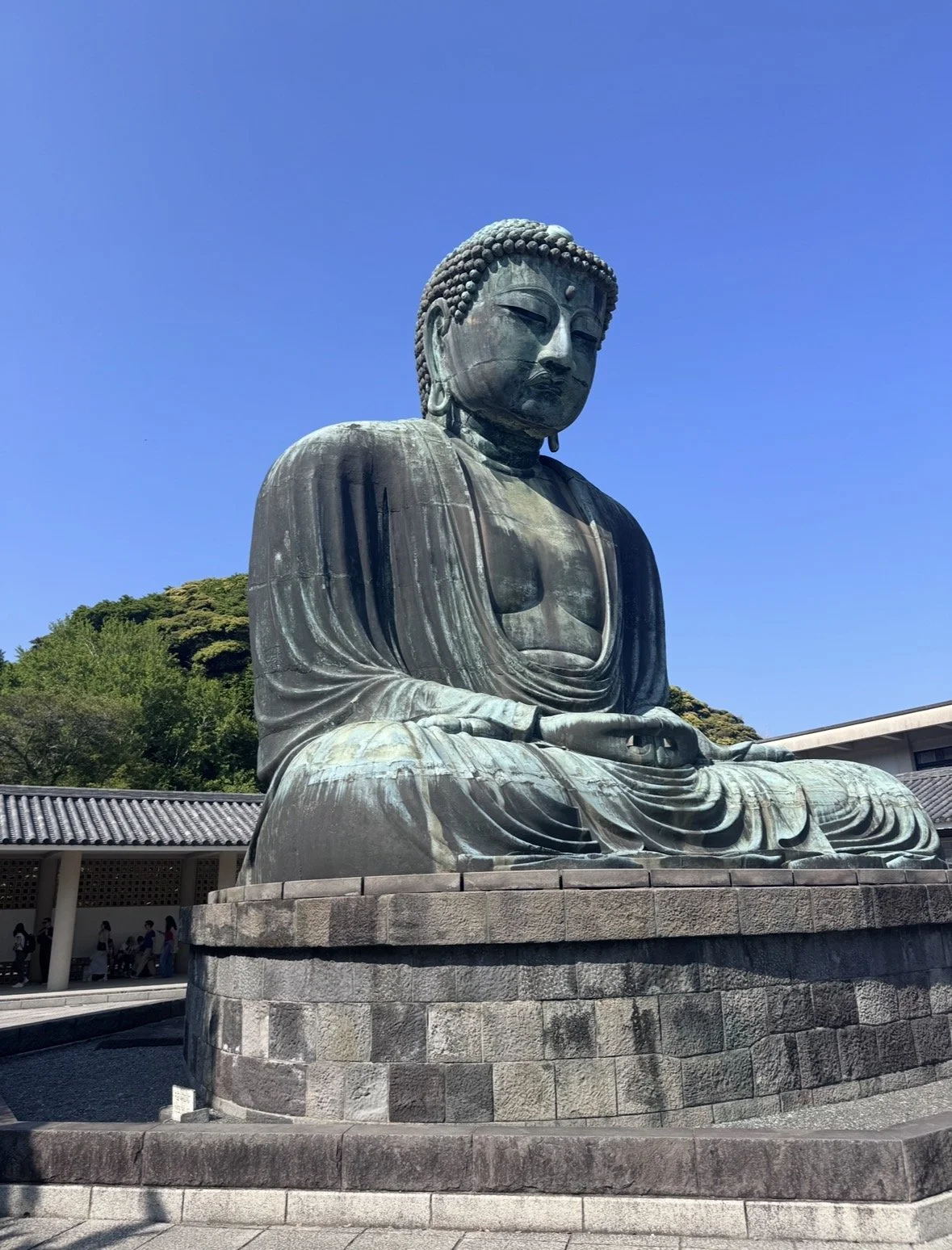
The Great Buddha of Kamakura is one of Japan's most recognizable landmarks and a highlight of any visit to Kamakura. Standing over 43 feet (13.35 meters) tall and weighing approximately 121 tons, the bronze Buddha has watched over visitors for more than 750 years. Unlike many famous Japanese temples, the statue now sits in the open air after the original temple hall was destroyed by storms and tsunamis centuries ago.
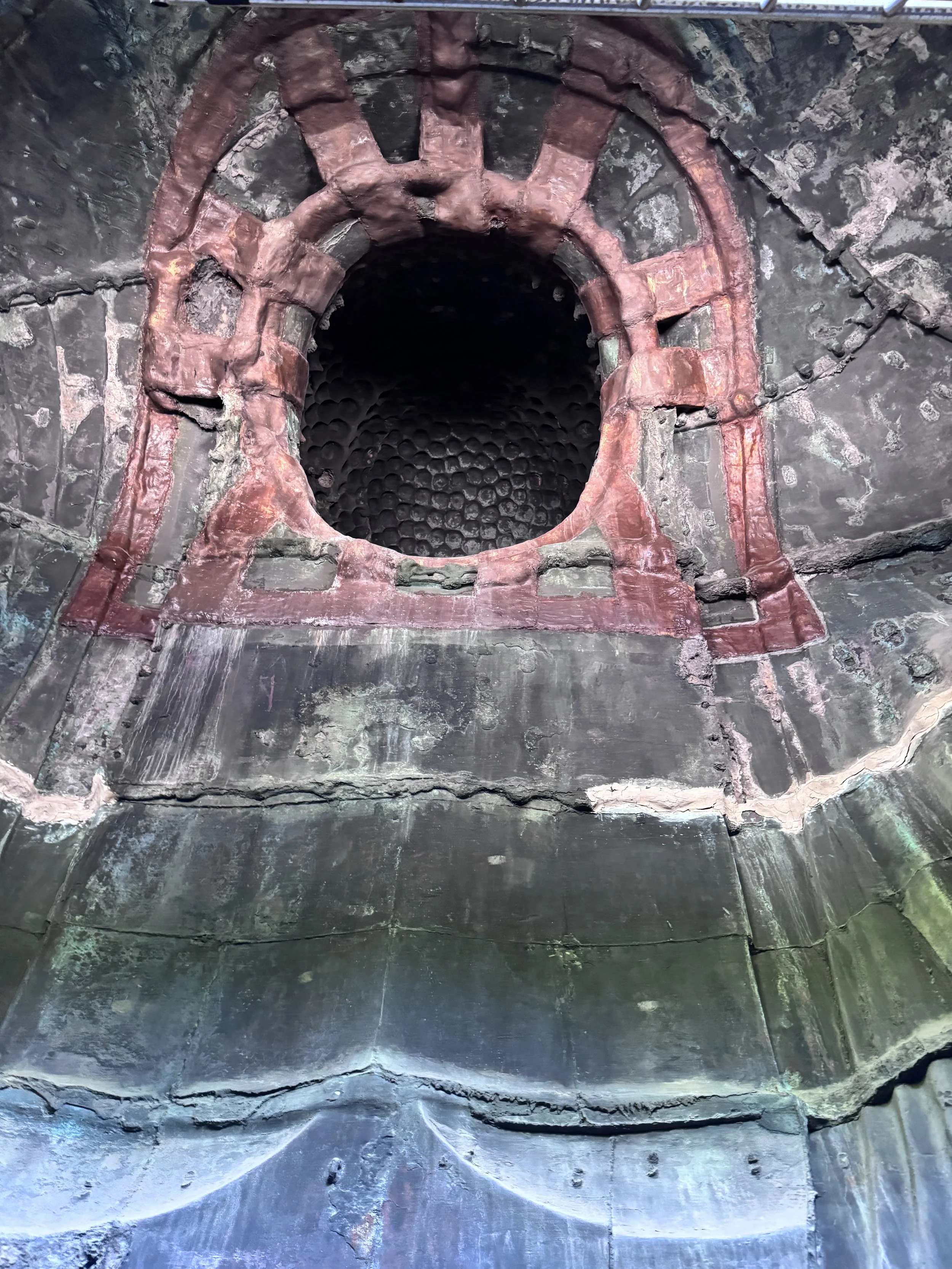
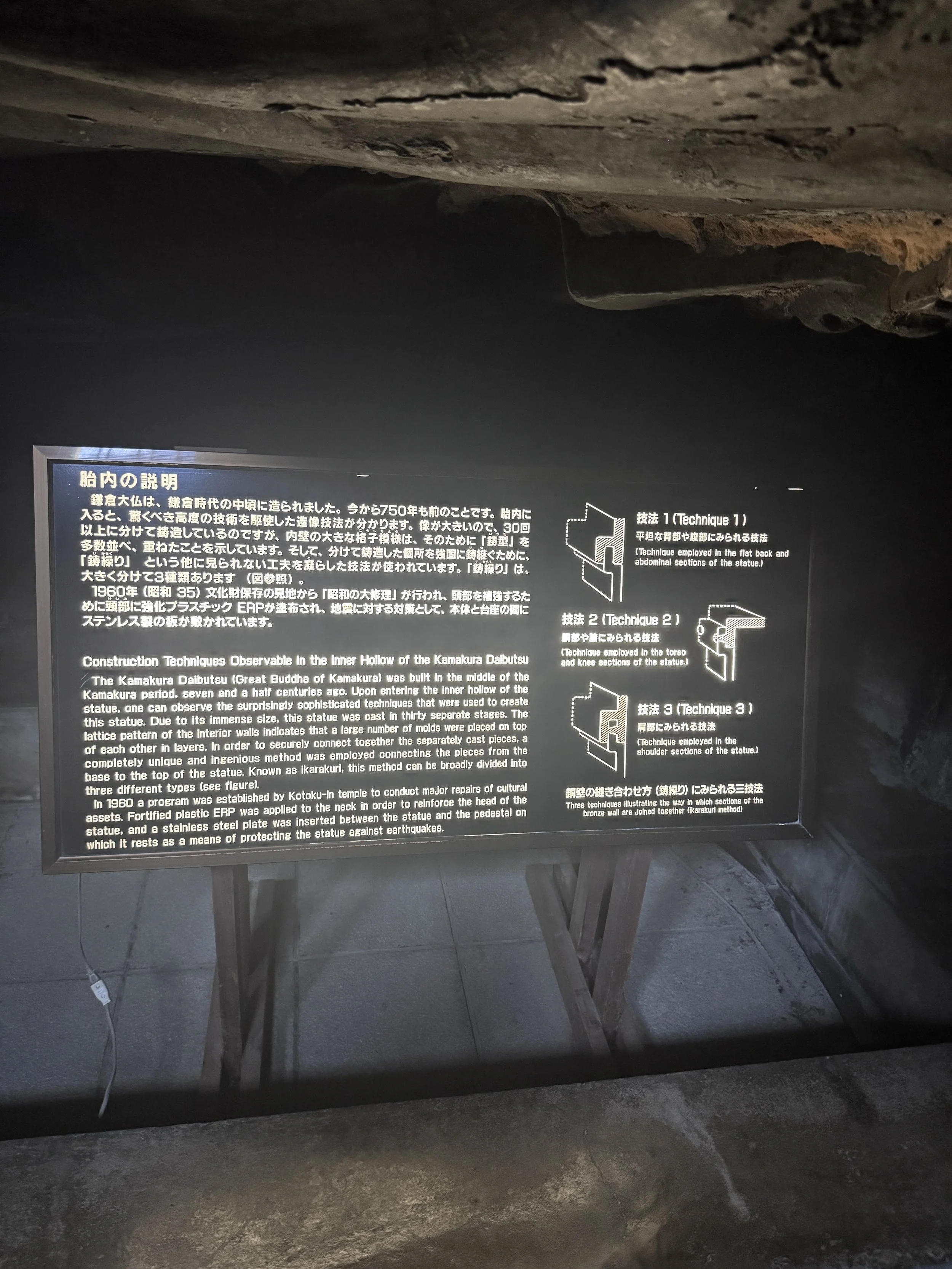
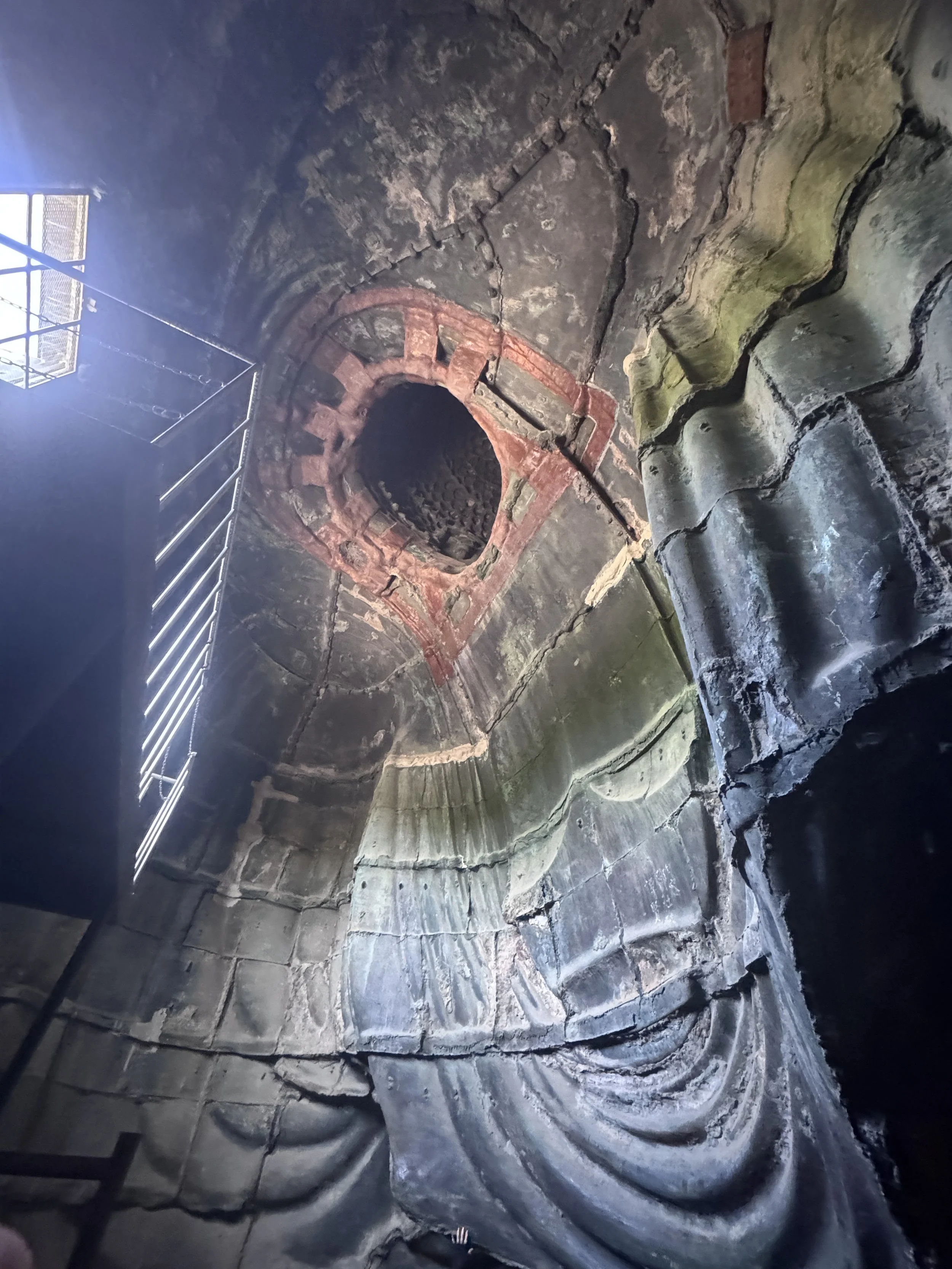
What makes the Kamakura Daibutsu especially fascinating is that visitors can actually step inside the statue. The interior reveals the remarkable engineering techniques used during the Kamakura period, showing how individual bronze sections were cast and assembled to create one of Japan's largest bronze sculptures.
Personal Take
While the Great Buddha is impressive from every angle, the most memorable part of the experience was stepping inside the statue itself. Seeing the seams, casting sections, and interior structure provides a rare look at medieval Japanese engineering and helps explain how this iconic monument has survived earthquakes, typhoons, and centuries of history.
It can be "toasty" inside
Enoshima Island: Coastal Views, Shrines, and a Relaxed Escape from Kamakura
Just 20 minutes from Kamakura, Enoshima offers a completely different experience. While Kamakura is known for temples and historic streets, Enoshima combines ocean views, seaside walking paths, gardens, shrines, and some of the best panoramic scenery in the region. It makes an excellent half-day addition to any Kamakura itinerary.
Entering Enoshima
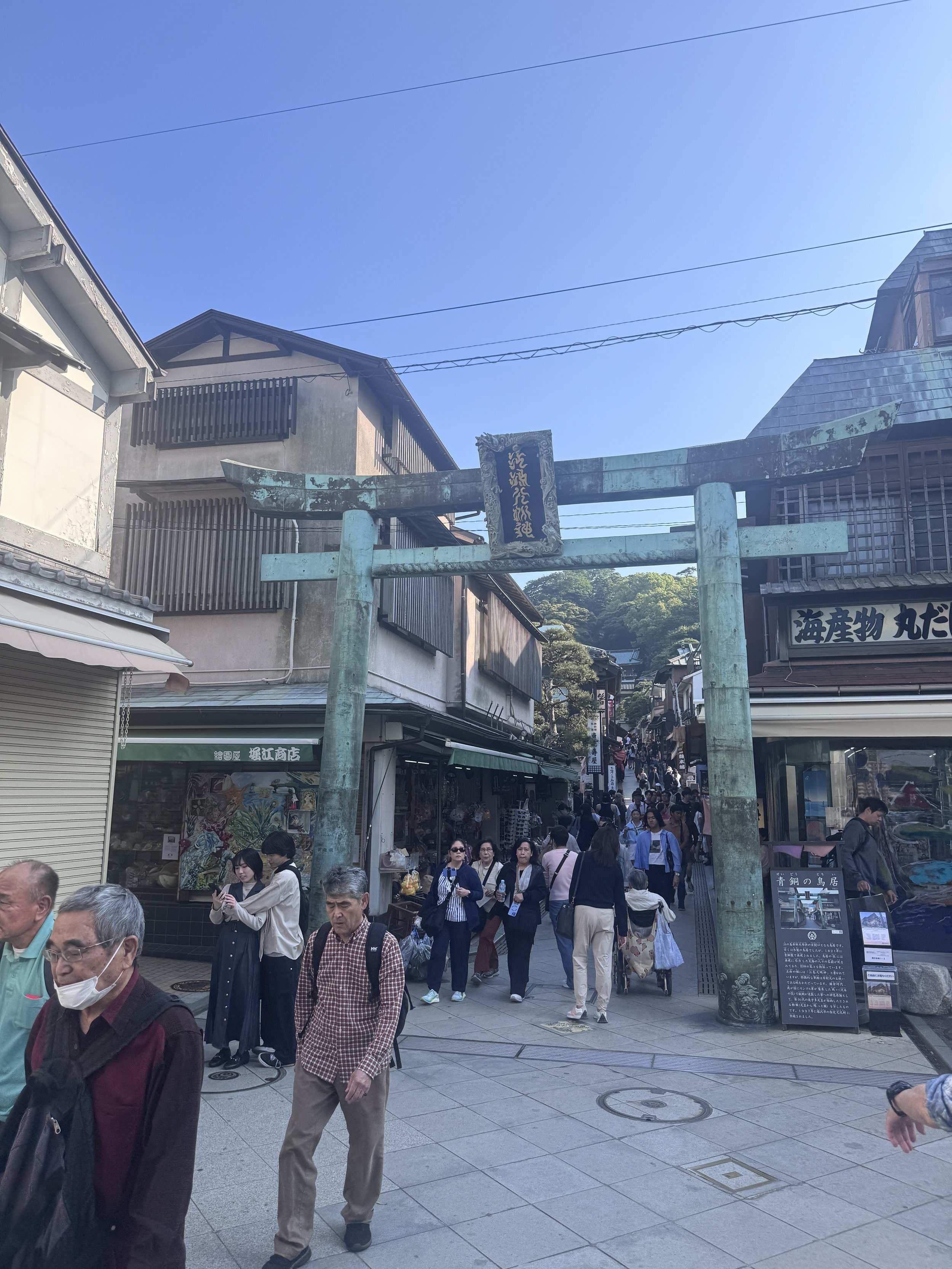
The walk onto Enoshima begins with a lively shopping street filled with seafood restaurants, souvenir shops, and local snacks. Passing through the historic torii gate marks the transition from the mainland to the island's sacred grounds.
Enoshima Shrine
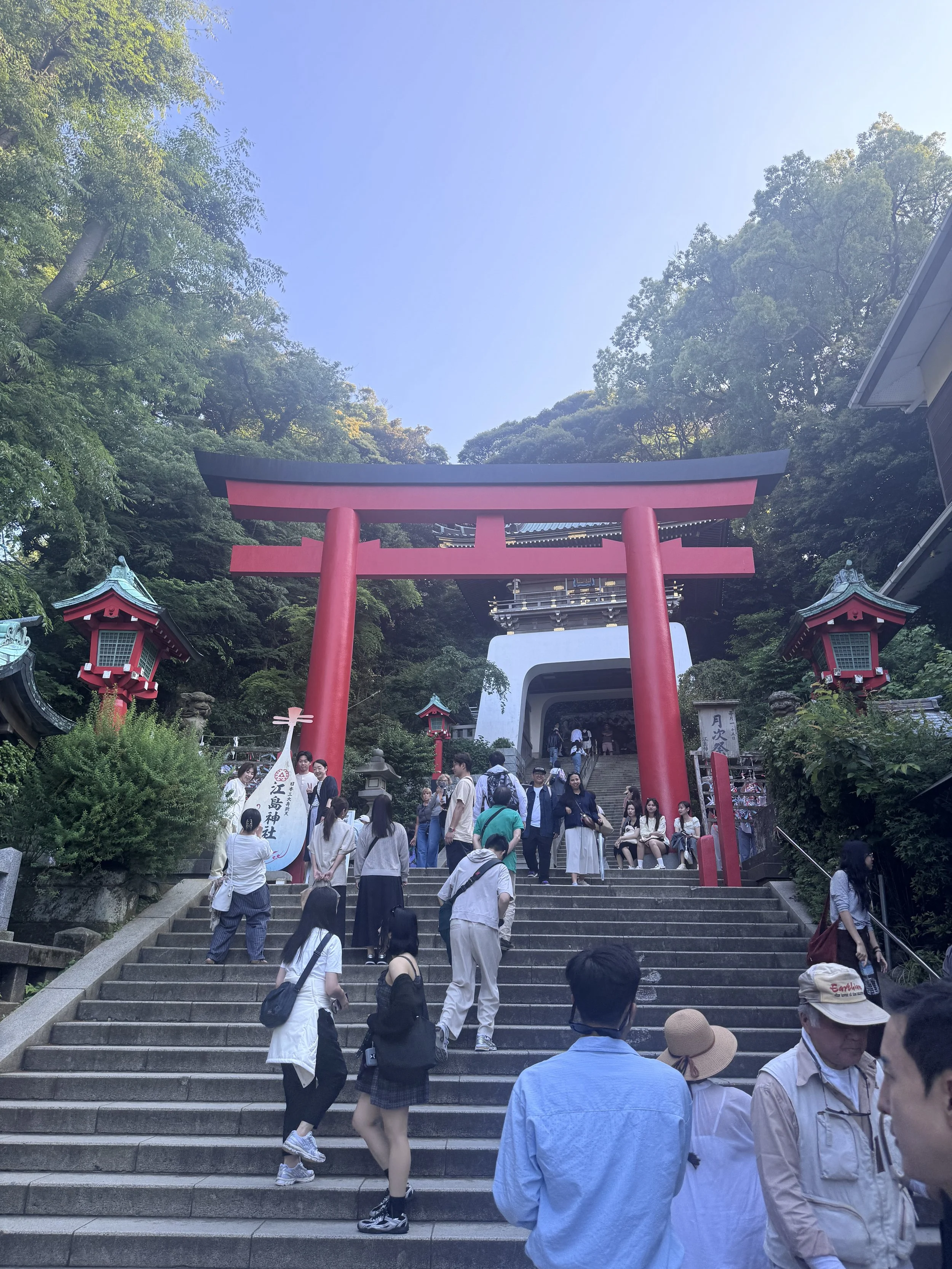
One of the island's most important attractions is Enoshima Shrine, a collection of shrine buildings dedicated to Benzaiten, the goddess of music, art, and prosperity. Visitors climb a series of stairways through forested pathways and traditional gates while enjoying views back toward Sagami Bay.
The bright red torii gate and hillside setting create one of the most recognizable scenes on the island.
Enoshima's Beaches
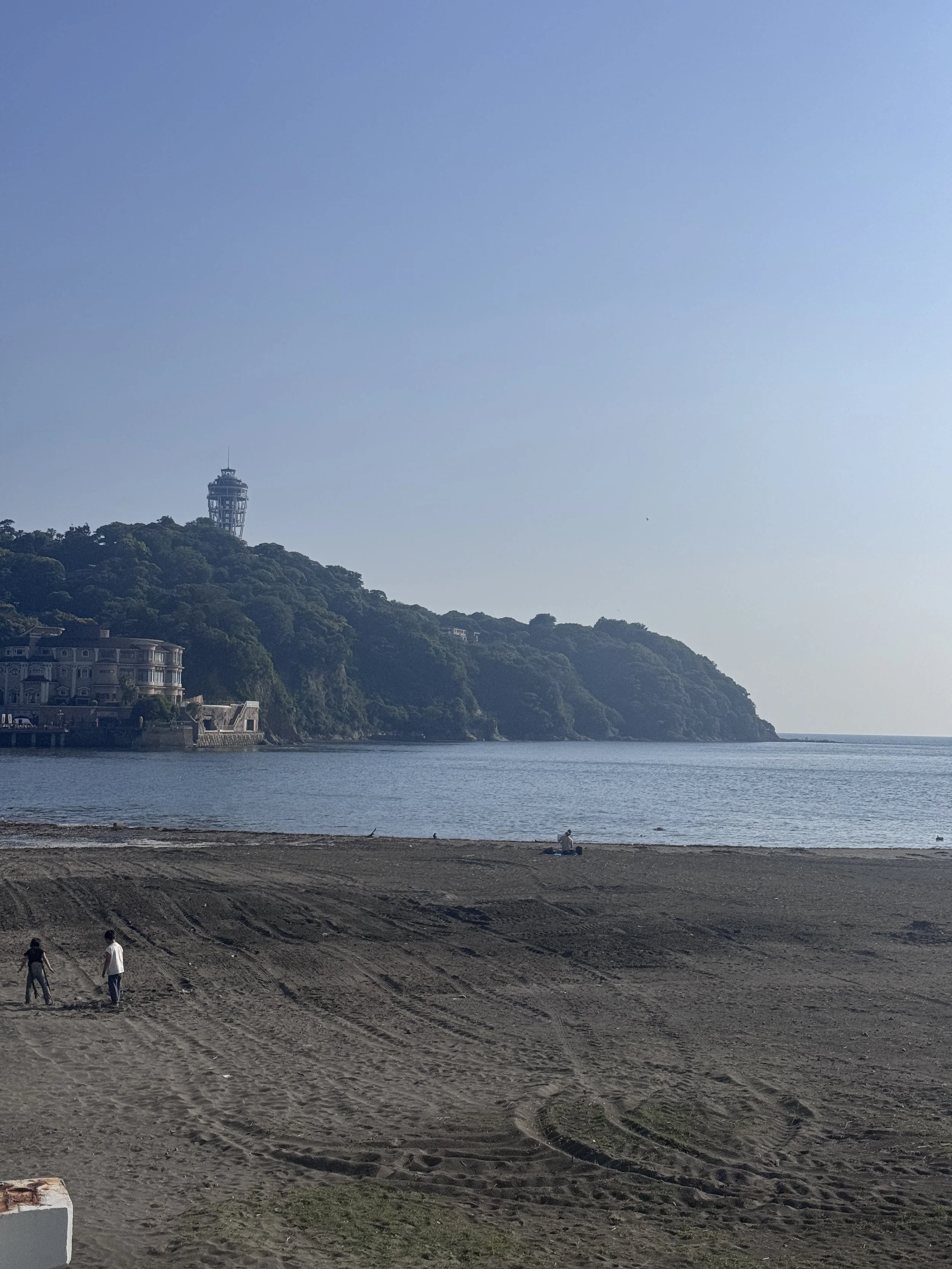
Before leaving the island, take a walk along the shoreline. The beaches and waterfront paths provide excellent views back toward Enoshima and offer a different perspective from the summit.
The relaxed atmosphere makes it easy to understand why the Shonan coast is a popular weekend destination for both locals and visitors.
Tokyo Hotels
Kyoto Guide
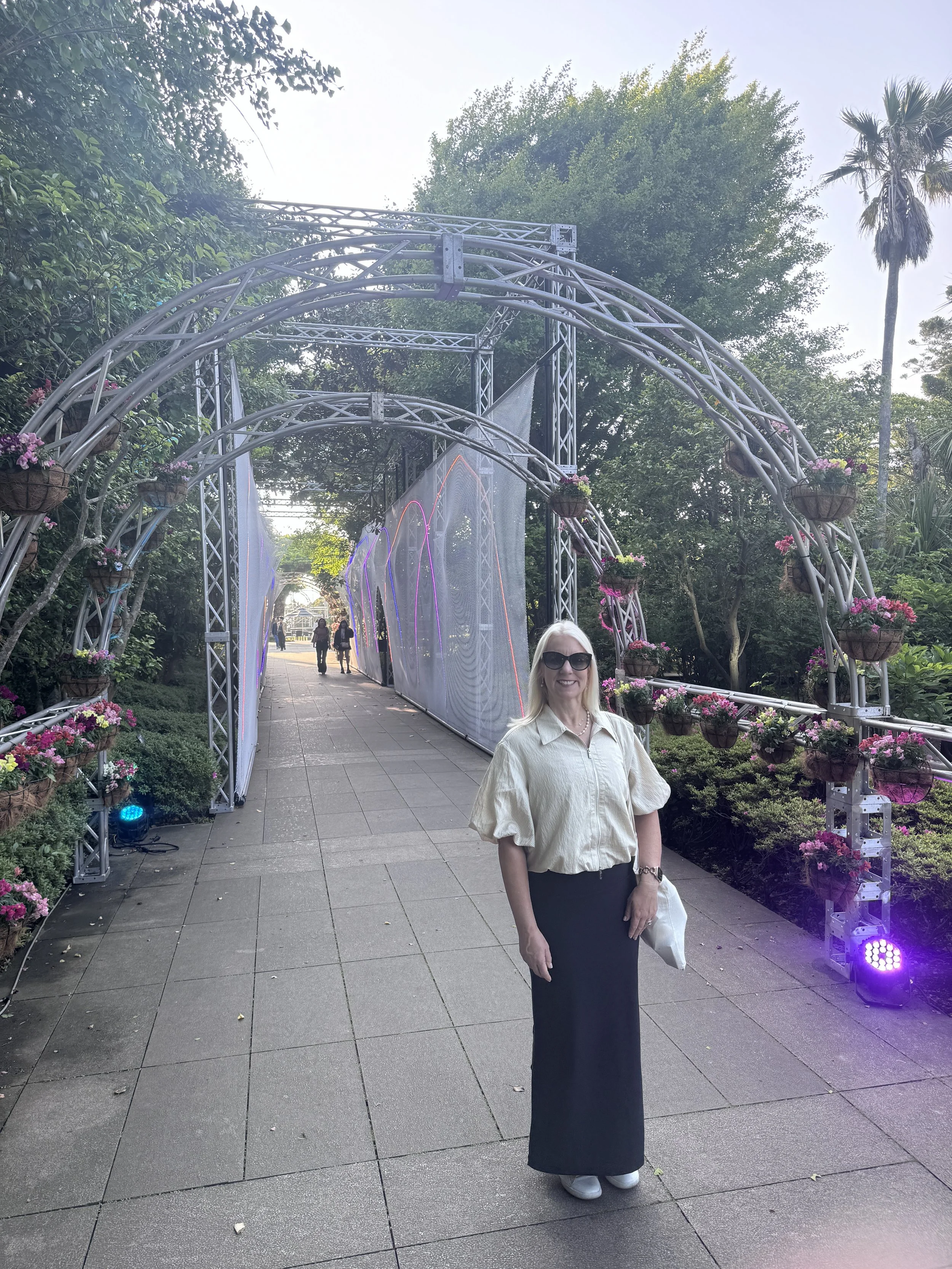
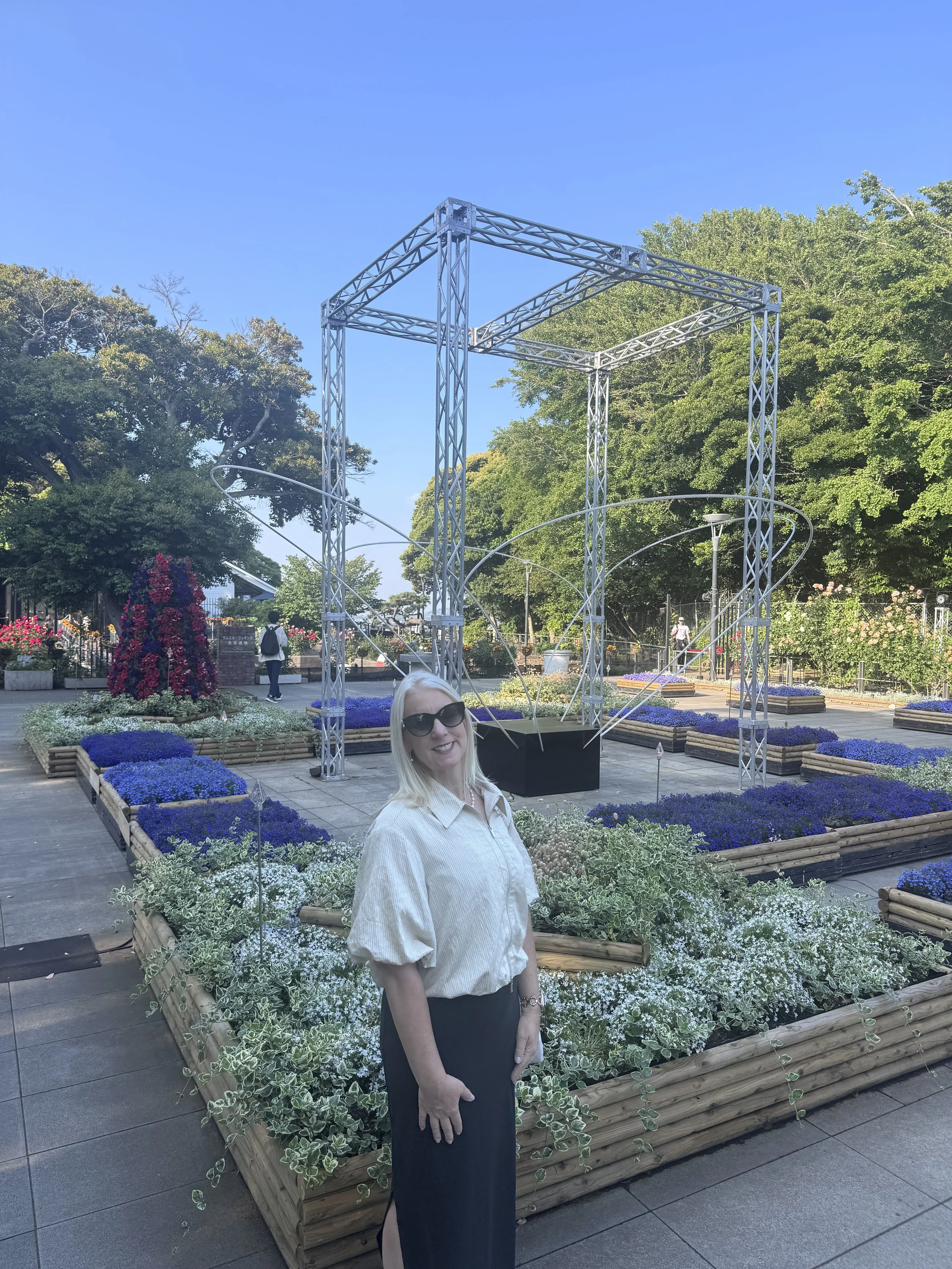
Samuel Cocking Garden
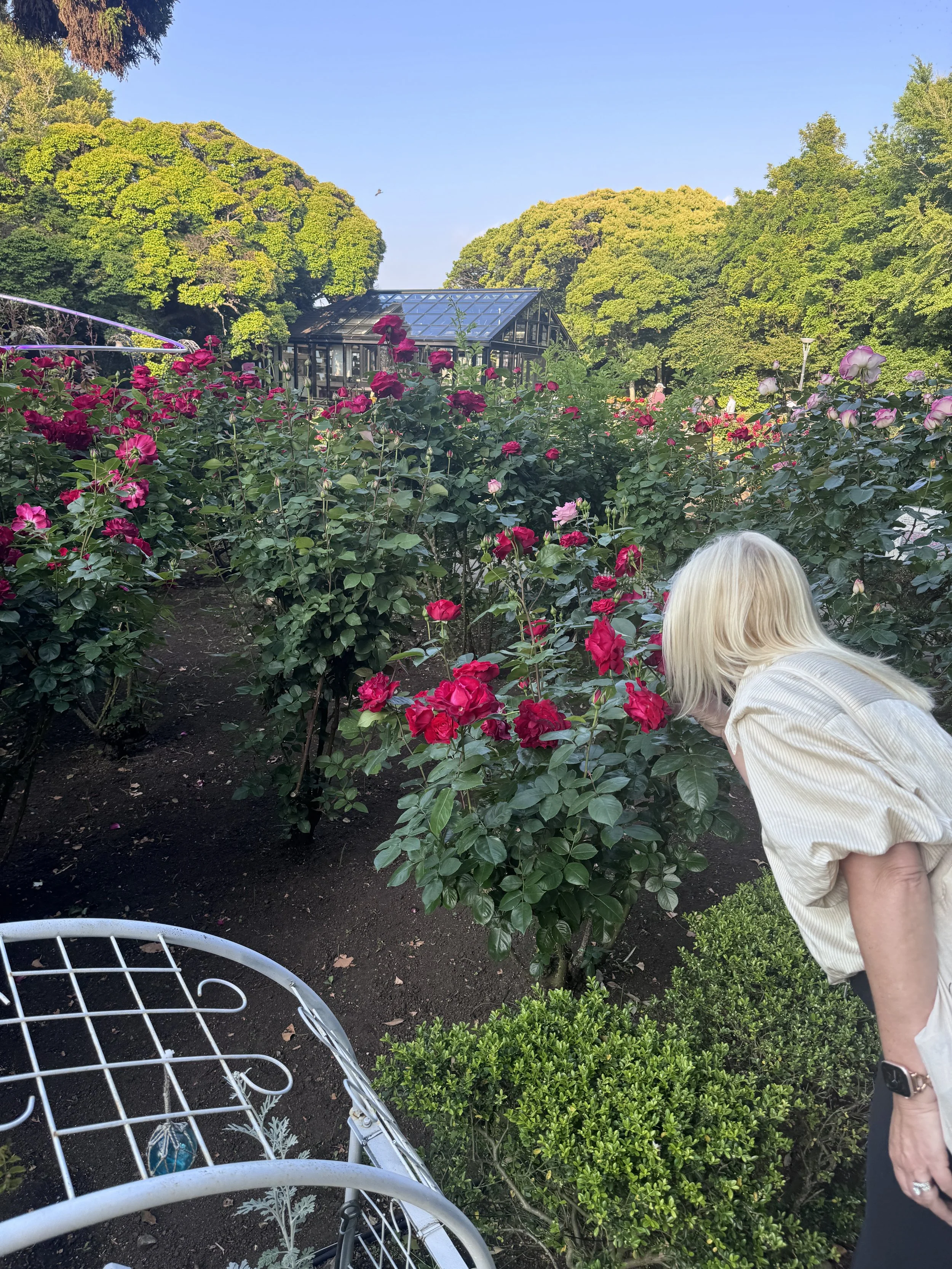
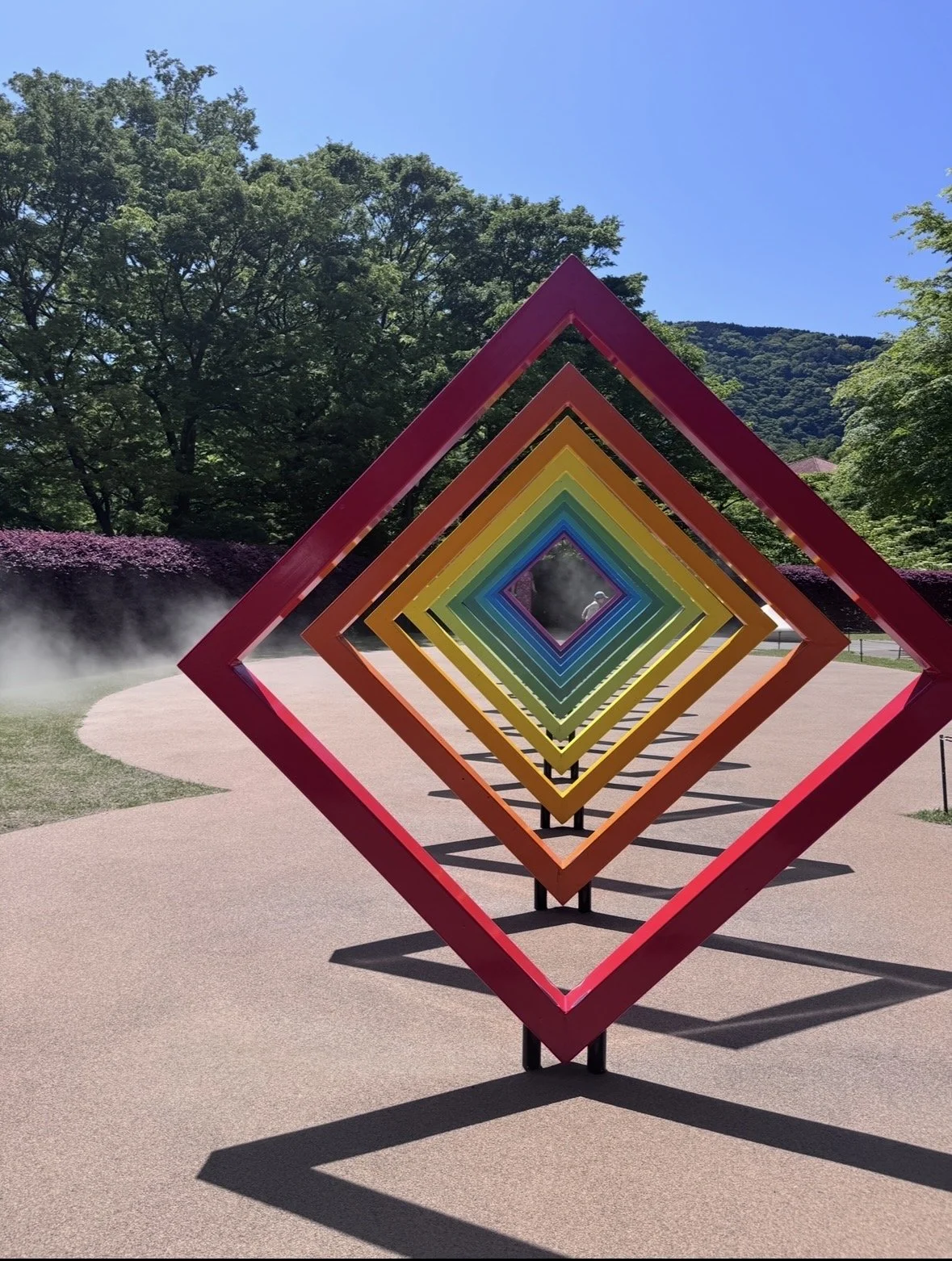
Near the summit of the island sits Samuel Cocking Garden, a landscaped park featuring seasonal flowers, walking paths, and open viewpoints. During our visit, colorful flower displays and art installations added vibrant color to the island's natural setting.
The garden provides a peaceful break from the crowds and is worth visiting even when the flowers are not at peak bloom.
Sea Candle Observation Tower
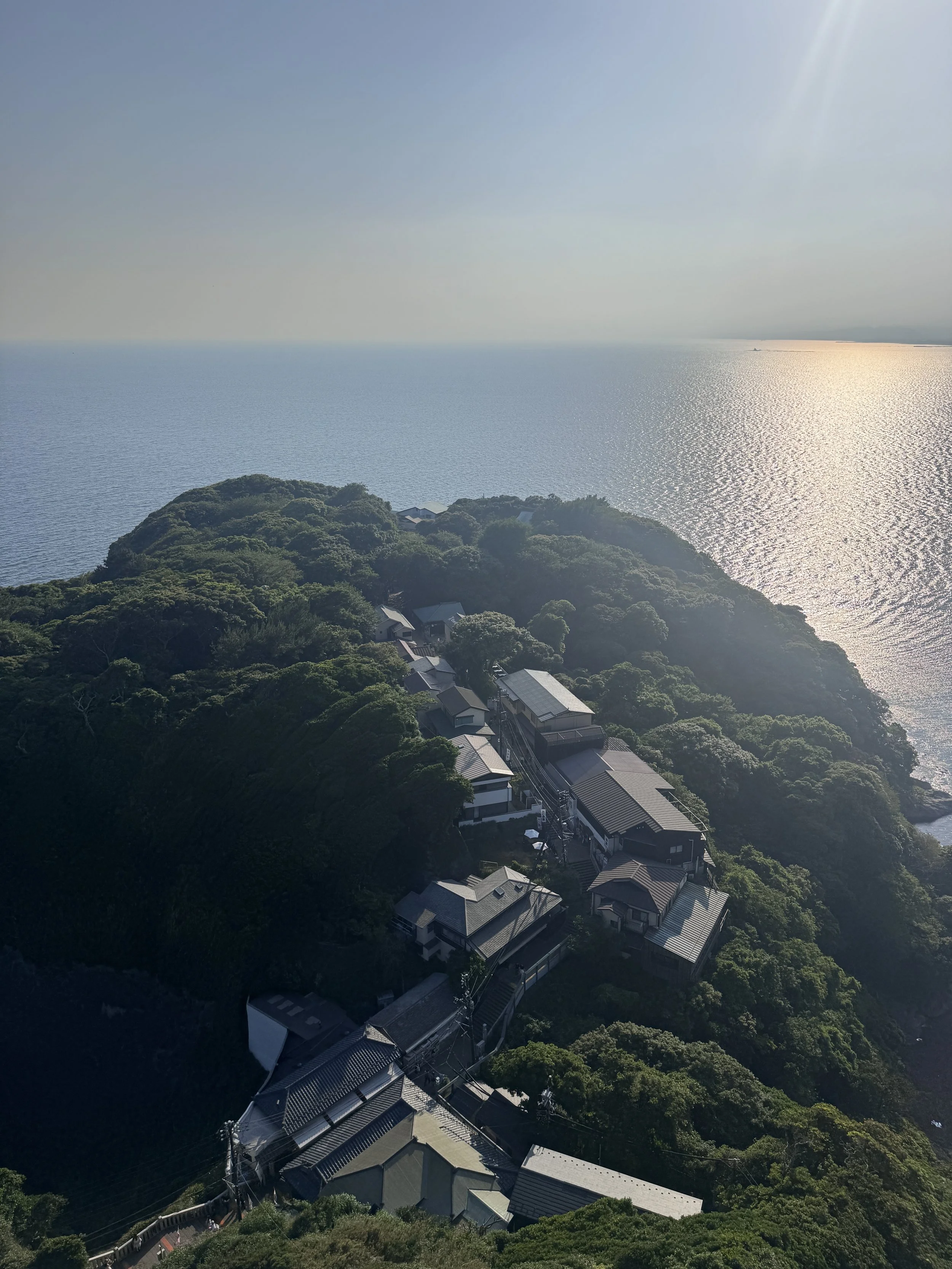
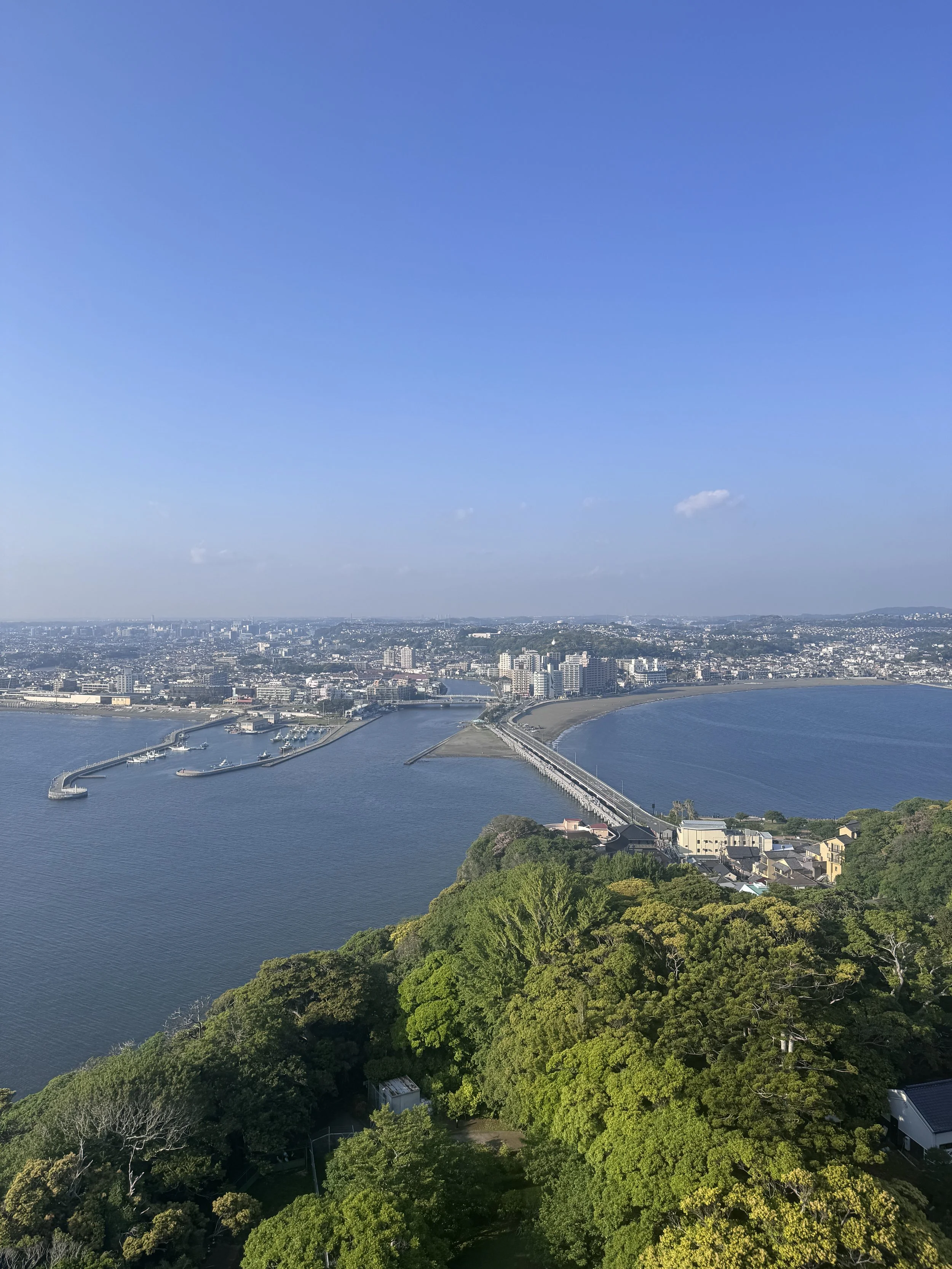
The highlight of Enoshima is the Sea Candle observation tower. An elevator ride to the top rewards visitors with sweeping views of Sagami Bay, the Shonan coastline, Enoshima Bridge, and the surrounding cities.
On clear days, Mount Fuji can often be seen in the distance. Even without Fuji, the coastal scenery alone makes the climb worthwhile.
Explore Other Japan Guides
Tokyo Guide
Tokyo Cocktail Guide